
Quick Summary
A broken garage door spring creates a severe, high-tension hazard that traps vehicles and requires immediate professional spring replacement to prevent catastrophic property damage and personal injury. ProGate Santa Clarita delivers fast, same-day spring replacement with upfront pricing, deploying licensed technicians to replace springs in matched pairs alongside full hardware inspections. Readers will understand how to safely handle a sudden spring failure, evaluate torsion versus extension systems, and contact ProGate Santa Clarita for reliable emergency repairs.
Garage Door Spring Replacement: Fast, Safe Same-Day Service
When a garage door spring snaps, your vehicle is suddenly trapped inside, and your primary home entryway is out of commission. Getting a professional spring replacement scheduled immediately is the safest and quickest way to get your garage functioning again. Residential torsion springs are generally engineered for roughly 10,000 open-and-close cycles. For an average household operating the door three to four times a day, that translates to about 7 to 10 years of dependable service before metal fatigue causes the steel coils to give out.[1]
Because counterbalance systems store massive mechanical tension, attempting to repair them without professional equipment is dangerous. Working with experienced technicians like those from ProGate Santa Clarita who arrive with the correct wire-gauge springs, winding bars, and replacement cables ensures your door is balanced properly and operating safely without costly delays.
What to Do When a Garage Door Spring Breaks
If you hear a loud bang from the garage or notice your door will not lift, stop using the automatic opener immediately. Forcing an opener motor to lift a door with a broken spring can strip the drive gear, bend the top door section, or snap the lift cables.
Depending on size and materials, a standard garage door can weigh anywhere from 150 to over 300 pounds. Without the counterbalance spring absorbing that weight, the door turns into deadweight that can crash down without warning. Disconnect the opener motor from power and keep everyone clear of the garage opening.
Immediate Safety Steps
- Do not touch the red emergency release cord if the door is open: Pulling the release cord while the door is stuck partially open will cause the heavy panels to freefall, risking severe injury and property damage.
- Keep the door closed: Leave the door resting flat on the garage floor until a technician arrives.
- Clear the area: Make sure family members and pets stay away from the tracks, cables, and overhead spring assembly.
- Call a local specialist: Contact a trusted local technician for same day garage door spring service to inspect and replace the broken hardware safely.
Why Professional Replacement Is Necessary
Replacing torsion or extension springs requires specialized winding cones, calibrated winding bars, and exact calculations based on door weight, wire size, inner diameter, and spring length. Installing the wrong spring size puts uneven strain on the opener, while an incorrectly wound spring can unwind violently during installation. Professional technicians carry OEM-grade replacement parts directly on their service trucks, completing torsion spring replacement and balance testing in a single visit.
Torsion Springs vs. Extension Springs: What Is the Difference?
Need spring replacement?
We’re available now — call for a fast, free estimate.
Garage doors rely on one of two counterbalance setups: torsion springs or extension springs. Understanding which system you have helps determine the correct repair approach.
Torsion springs mount horizontally on a steel shaft directly above the garage door opening. When the door closes, cables attached to the bottom corners turn drums on the shaft, winding the springs tightly and storing rotational energy. When the door opens, the springs unwind, transferring that torque to lift the door smoothly. Torsion setups are quieter, offer controlled movement, and safely hold the spring on the shaft if a break occurs.
Extension springs mount along the horizontal tracks on both sides of the door. These springs stretch out linearly as the door lowers and contract to pull the door open. Because extension springs operate under heavy tension, performing spring work is dangerous and should always be handled by a professional technician.
| Feature | Standard Torsion Springs | Extension Springs | High-Cycle Torsion Springs |
|---|---|---|---|
| Mounting Location | Above door header | Along upper horizontal tracks | Above door header |
| Mechanical Action | Rotational torque | Linear stretch | Rotational torque |
| Safety Containment | Contained securely on steel shaft | Requires internal safety containment cable | Contained securely on steel shaft |
| Standard Lifespan | Roughly 10,000 cycles | 5,000 to 10,000 cycles | 25,000 to 50,000 cycles |
| Door Movement | Smooth, balanced, and quiet | Can pull unevenly over time | Smooth, balanced, and quiet |
Checking Cables, Drums, and Center Bearings
A complete garage door spring and cable repair goes beyond just swapping out the coil. When a spring snaps, the sudden release of energy frequently frays lift cables, misaligns aluminum cable drums, or damages the center nylon bearing plate. A qualified technician from ProGate Santa Clarita will inspect the entire assembly, replacing worn hardware to make sure the new springs operate without binding or premature friction.
Why Do Garage Door Springs Snap?
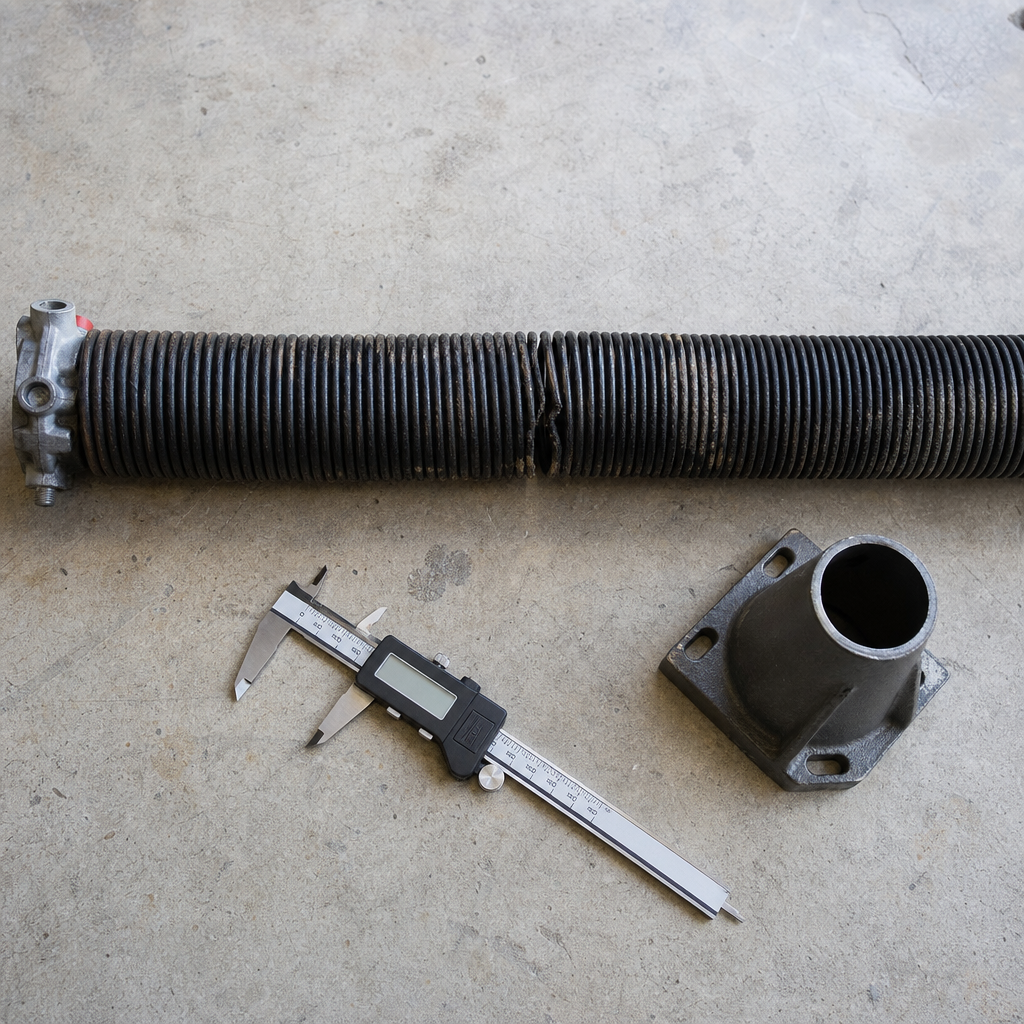
Every time your door opens and closes, the spring steel twists or stretches, gradually weakening the molecular structure of the metal. While usage frequency is a primary factor in wear, environmental conditions also play a massive role in unexpected failures.
Climate and Usage Factors
Both local climate and daily usage patterns can significantly affect the operating life of garage door springs. Temperature swings cause metal to expand and contract, placing recurring stress on the coils. Combined with daily wear, fluctuating environmental conditions can accelerate fatigue and lead to spring failure over time, making regular maintenance and balance checks essential.
Cycle Ratings and Heavy Daily Use
A standard 10,000-cycle rating sounds substantial, but daily habits add up quickly. If a busy household uses the garage door as the primary front door for multiple cars, kids’ bikes, and deliveries, the system can easily log 8 to 10 cycles a day. At that rate, standard springs will reach the end of their fatigue life in under three years. Upgrading to high-cycle springs rated for 25,000 to 50,000 cycles provides longer-lasting performance for heavy daily use.[2]
How Much Does Garage Door Spring Replacement Cost?
Need spring replacement?
We’re available now — call for a fast, free estimate.
The broken garage door spring replacement cost for standard residential systems typically ranges from $150 to $350 for a complete, matched set of springs, including both parts and labor. The final price depends on door weight, system type, wire size, and whether you are repairing a standard single-car door, a heavy double-car carriage door, or commercial garage door spring replacement setups.
Always demand an upfront, transparent estimate before any work begins. Trustworthy contractors provide clear pricing in writing and never tack on surprise service fees once the tools come out.
Why Springs Should Always Be Replaced in Pairs
If your garage door uses two torsion springs and only one has broken, it is tempting to replace just the broken side. However, both springs were installed at the same time and have endured the exact same number of cycles and thermal stresses. The unbroken spring is almost certainly near failure as well. As recommended by ProGate Santa Clarita, replacing both springs simultaneously balances the lifting torque evenly across the header, prevents track binding, and saves you the cost of paying for a second emergency service call weeks later.
Frequently Asked Questions About Spring Replacement
How much does garage door spring replacement cost?
Most residential spring replacements cost between $150 and $350 for parts, professional labor, and safety balance testing. Custom wood doors, heavy glass panels, or commercial doors with high-cycle requirements may cost more based on the heavy-duty hardware required.
Can I replace a garage door spring myself or should I hire a professional?
You should always hire a professional technician. Garage door springs hold enough stored tension to break bones, cause severe lacerations, or damage property if an adjustment tool slips. Professional technicians use specialized winding equipment and understand how to calculate exact spring tension safely.
What are the warning signs of a broken or failing garage door spring?
Common warning signs include a visible 2-inch gap in the spring coil above the door, a door that opens only a few inches before the opener stops, loose or dangling cables, a door that feels extremely heavy when lifted manually, or squeaking and jerky movement during operation.
Is it safe to open a garage door with a broken spring?
No. Opening a door with a broken spring is unsafe. The opener motor is only designed to guide the door, not lift hundreds of pounds of deadweight. Attempting to run the motor can burn out the drive gears, bend the door sections, or cause the door to fall suddenly.
How long do garage door springs typically last before needing replacement?
Standard residential springs last roughly 7 to 10 years based on three to four daily cycles (around 10,000 total cycles). In areas with sharp daily temperature shifts or in homes where the door is opened frequently throughout the day, springs may need replacement every 3 to 5 years unless upgraded to high-cycle steel.
How quickly can a technician arrive for emergency garage door spring repair?
Reputable local service providers like ProGate Santa Clarita offer emergency garage door spring repair and same-day service to safely inspect and replace broken components.
Need spring replacement?
We’re available now — call for a fast, free estimate.
Sources
- The True Cost of a Broken Garage Door Spring – americansmallbusinessresearch.org
- How Long Do Garage Door Springs Last? – gashardware.com
Frequently Asked Questions
How long does professional garage door spring replacement take on-site?
A standard residential spring replacement typically takes between 45 to 60 minutes for a certified technician to complete. ProGate Santa Clarita arrives with fully equipped service vehicles to perform the removal, new spring installation, and safety balance testing in a single visit.
Can I convert my garage door system from extension springs to torsion springs?
Yes, converting from extension springs to a torsion spring system is a common upgrade that delivers smoother operation, greater safety, and a longer operational lifespan. ProGate Santa Clarita can assess your door clearance and perform a full torsion assembly conversion during your scheduled service.
Can I manually lift the garage door to get my car out if a spring breaks?
Attempting to manually lift a door with a broken spring is dangerous because you must lift 150 to over 300 pounds of unassisted deadweight, risking severe strain or dropping the door. If your vehicle is trapped, contact ProGate Santa Clarita for same-day emergency assistance to safely operate or secure the door.
About the author
 |
Sarah Miller Sarah Miller is a home security and maintenance specialist with over seven years of experience in the garage door industry. She holds a Bachelor of Science in Mechanical Engineering from California State University, Northridge, giving her a deep understanding of the mechanics behind garage door systems. Her writing focuses on practical, actionable advice for homeowners dealing with emergency repairs and routine maintenance. |
Garage door broken, stuck, or off track?
We’re available now — call for a fast, free estimate.
Call Now - Free Estimate